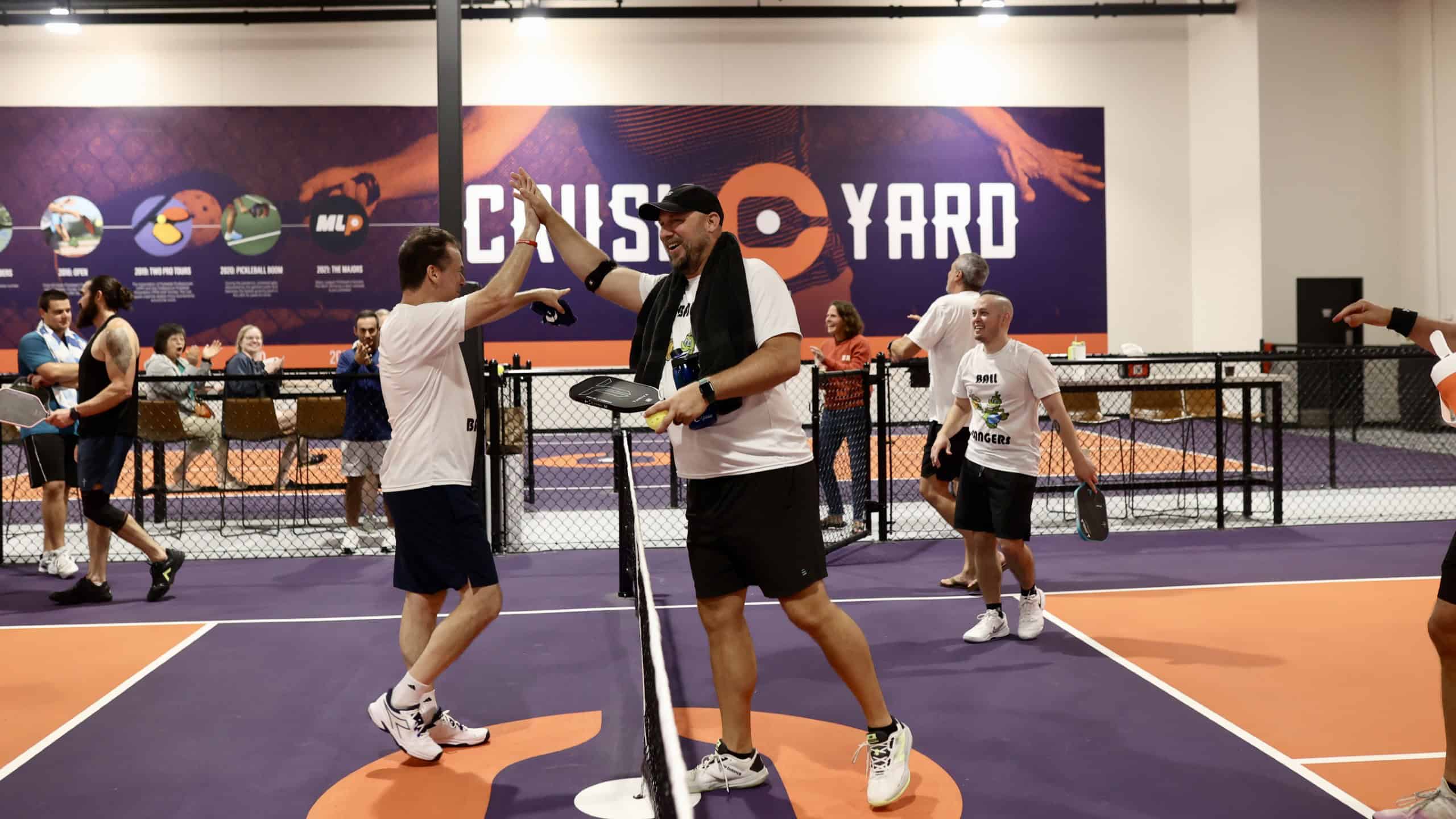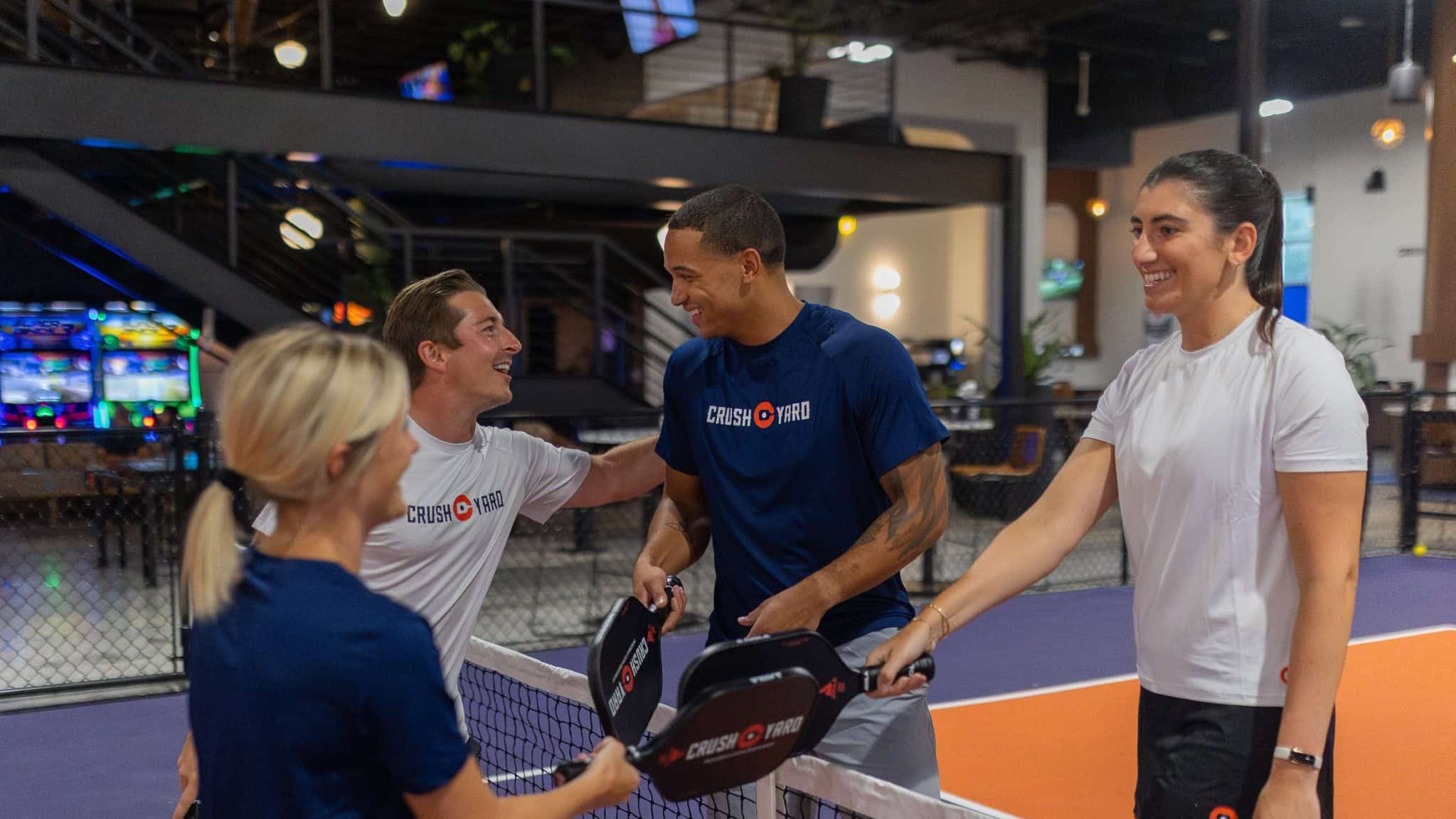
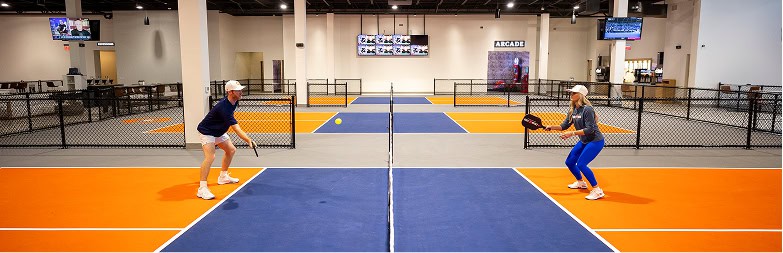
Pickleball is a paddle sport that combines elements of tennis, ping pong, and badminton, played on a smaller court with a paddle and a plastic ball. Beginners can learn how to play pickleball quickly by understanding a few core rules, including serving underhand, allowing the ball to bounce once on each side before volleys, and avoiding volleys inside the non volley zone, commonly called the kitchen. The game is easy to pick up, highly social, and designed for players of all ages and skill levels.
What Is Pickleball?
Pickleball has become one of the fastest growing sports in the United States because it is simple, social, and accessible. It is typically played in doubles, which allows beginners to ease into the game without feeling overwhelmed by court coverage or pace.
The court is smaller than a tennis court, and the ball travels at a manageable speed, which gives new players time to react and build confidence. This design makes it possible for someone with no prior experience to step onto a court and begin rallying within minutes.
The growth of pickleball is also tied to its environment. It is not just a sport focused on competition. It is built around interaction, repetition, and community. This is why social venues, leagues, and indoor facilities are becoming central to how people learn and continue playing.
Why Pickleball Is Ideal for Beginners
Pickleball works for beginners because it simplifies the experience of learning a sport. The rules are straightforward, the equipment is minimal, and the pace encourages longer rallies rather than quick points.
A new player does not need advanced coordination or strength to participate. The underhand serve removes the complexity of overhead mechanics, and the two bounce rule slows the start of each point. These elements create a natural learning curve that feels manageable.
Another important factor is the social structure. Most games are played in doubles, which means beginners are rarely learning alone. They are part of a group dynamic where communication and shared play make the experience more comfortable. This is one of the reasons people often try pickleball for the first time during group outings, events, or casual meetups.
Pickleball Court Layout Explained
Understanding the court layout is one of the fastest ways to feel more confident as a beginner.
The baseline marks the back of the court, while the sidelines define the boundaries on each side. The center of attention for most new players is the non volley zone, often called the kitchen. This area extends from the net and plays a major role in how points are controlled.
Players are not allowed to hit the ball out of the air while standing inside the kitchen. This rule prevents aggressive net dominance and keeps rallies more balanced. It also introduces strategy early, since players must think about positioning rather than simply reacting.
The service areas are divided into left and right sections. Serves must land diagonally across the court, which creates a predictable starting point for each rally.
Basic Pickleball Rules for Beginners
Learning how to play pickleball starts with a small set of rules that define the flow of the game.
The serve is always underhand, with contact made below the waist. It must travel diagonally into the opponent’s service box. Unlike tennis, there is no second serve, so consistency matters from the beginning.
After the serve, the two bounce rule applies. The receiving team must let the ball bounce once before returning it. Then the serving team must also allow a bounce before hitting their next shot. Only after these two bounces can players begin volleying.
The kitchen rule limits volleys near the net. A player cannot stand inside the non volley zone and hit the ball out of the air. They can enter the kitchen to return a ball that has bounced, but they must reset their position before attempting a volley.
Points can only be scored by the serving team. This structure creates a steady rhythm and makes each service turn meaningful.
How Pickleball Scoring Works
Scoring is one of the few parts of pickleball that feels unfamiliar at first, but it becomes intuitive through play.
Games are usually played to 11 points, and a team must win by two. Only the serving team can earn points, which means that holding serve is important.
In doubles, the score is called using three numbers. The first number represents the serving team’s score, the second represents the receiving team’s score, and the third indicates whether it is the first or second server on that side.
For beginners, it is not necessary to master scoring immediately. Most players pick it up naturally after a few games. The priority early on should be understanding how to keep the ball in play and how to move around the court.
Equipment You Need to Start Playing
One of the reasons pickleball is so accessible is the limited equipment required.
A paddle is the primary piece of equipment. It is solid, lightweight, and easy to control. The ball is made of plastic with small holes, designed to create a consistent and predictable bounce.
Comfortable athletic clothing and proper court shoes help with movement and stability. While beginners can start casually, having the right footwear becomes more important as play becomes more frequent.
Many indoor venues make it even easier by offering paddle rentals and ready to play courts. This removes the need for any upfront investment and encourages first time participation.
Beginner Pickleball Tips to Improve Quickly
New players often improve faster by focusing on a few simple habits rather than trying to master advanced techniques.
Consistency is more valuable than power. Keeping the ball in play forces opponents to make mistakes and builds confidence with each rally. Positioning also plays a major role. Staying balanced and aware of the kitchen line helps prevent easy errors.
Communication becomes important in doubles. Calling shots and understanding who will take the ball reduces confusion and keeps play smooth. Controlled shots, especially softer ones near the net, are often more effective than aggressive swings.
Progress in pickleball tends to happen quickly because the feedback loop is immediate. Each point teaches positioning, timing, and decision making in real time.
People Also Ask
How do you start playing pickleball as a beginner?
Most beginners start by learning the basic rules, especially serving, the two bounce rule, and kitchen positioning. The easiest way to begin is by playing casual games in a relaxed setting or visiting an indoor venue where beginner friendly courts and social play are available.
Is pickleball hard to learn?
Pickleball is widely considered one of the easiest sports to learn. The rules are simple, the court is small, and rallies develop quickly. Many players are able to play their first full game within a single session.
What are the basic rules of pickleball?
The key rules include underhand serving, the two bounce rule, no volleys in the kitchen, and scoring only on serve. These rules shape how every point is played and create a balanced game for all skill levels.
Can you play pickleball without experience?
Yes, pickleball is designed for players with no prior experience. Many people try the sport for the first time in social environments where the focus is on participation rather than competition.
Where to Play Pickleball as a Beginner
Once you understand how to play pickleball, the next step is finding the right place to play.
Outdoor courts are common in public parks, but they often depend on weather and availability. This can make it harder for beginners to get consistent practice.
Indoor courts provide a more controlled experience. Lighting, surface conditions, and scheduling are more reliable, which helps new players focus on learning rather than adjusting to the environment.
Social pickleball venues represent the next step in the evolution of the sport. These spaces combine courts with lounge areas, food, drinks, and organized play. For beginners, this creates a more welcoming atmosphere that reduces the pressure often associated with traditional sports settings.
Pickleball Leagues and Social Play for Beginners
After learning the basics, structured play becomes the fastest way to improve.
Beginner leagues are designed to group players by skill level. This ensures that games are competitive but still approachable. Playing regularly against similar skill levels helps build consistency and confidence.
Social play sessions offer a more flexible format. Players rotate in and out of games, which creates opportunities to meet new people and experience different playing styles.
As players improve, they often move into more structured formats like tournaments or competitive leagues, but the foundation is always built through consistent, social play.
Pickleball as a Social Experience
Pickleball has grown because it fits naturally into social settings. It is not just about playing a game. It is about creating an experience that people want to repeat.
The sport works well for groups because it allows players of different skill levels to participate together. This makes it ideal for birthdays, team outings, and casual gatherings.
It also translates well into event environments. Corporate events, private parties, and group bookings are increasingly centered around pickleball because it provides both activity and interaction.
The addition of food and beverage service transforms a simple game into a full outing. Players can move between the court and social spaces, extending the experience beyond play.
You can view menu options here: crushyard.com/menu
Why Indoor Pickleball Makes Learning Easier
Indoor pickleball removes many of the challenges that beginners face.
Weather is no longer a factor, which allows for consistent scheduling. Lighting and court conditions remain stable, which improves visibility and ball tracking. This consistency helps players develop timing and control more quickly.
Indoor venues also tend to offer more structure. Organized play sessions, leagues, and beginner friendly programming create a clear path for progression. Instead of figuring everything out independently, new players can follow a defined learning experience.
This environment is especially valuable for first time players who want to build confidence quickly.
Why Crush Yard Is Built for First-Time Players
Crush Yard is designed to make pickleball accessible from the first visit. It combines indoor courts with a full social environment that includes food, drinks, and event space.
For beginners, this removes the intimidation factor that can come with traditional sports settings. The focus is on participation, not performance. Players can learn the game, meet others, and stay engaged without needing prior experience.
The model supports repeat visits by turning a first game into an ongoing activity. What begins as a casual introduction often becomes part of a weekly routine that includes leagues, social play, and group events.
This approach reflects a broader shift in how people engage with sports. It is less about isolated competition and more about shared experiences that combine activity and social connection.
How to Start Playing Pickleball Today
Getting started with pickleball is straightforward. Learn the basic rules, step onto a court, and begin playing. Improvement happens naturally through repetition.
Booking a court is often the easiest way to begin in a structured environment: Book A Court
From there, joining a league or attending a social play session helps build consistency and connection.
Final Thoughts
Learning how to play pickleball is simple, but continuing to play is what turns it into something more. The game quickly becomes part of a routine because it blends activity with social interaction.
For beginners, the most important step is getting on the court. Once that happens, the combination of easy rules, fast learning, and social energy takes over.
Crush Yard exists at that next stage of the journey. It provides a place where beginners can start, improve, and keep coming back, all within an environment designed for both play and connection.